Submitting to UK Literary Agents: A Seasonal Timeline for Debut Novelists
A month-by-month guide to when UK literary agents are busiest, how long replies take, and how to plan your...


Most writers have an abandoned outline somewhere. You filled in the template, numbered the beats, and by page two of the plan your characters had started explaining themselves. The plot was tidy. Nobody in it sounded like a person. That is not proof you cannot outline — it usually means you outlined the plot and left the voice outside the room.
Structure is not the enemy; vague language is. When a scene card reads "the protagonist confronts her fear of commitment", your brain writes towards the idea of confrontation rather than a woman standing in a doorway deciding whether to take her coat off. Outline in abstractions and you draft in abstractions.
The second culprit is too much detail. A fifty-page outline is a novel written badly, and you will spend the draft translating your own summary into prose. Beats are useful. Dialogue spoken by nobody, in a planning document, is not.
Before you decide anything about acts, generate raw voice material. Give yourself an hour and write a scene with no purpose: two people in a car, a character lying to a doctor's receptionist, anything. Don't place it. Don't make it count. What you want is a sample of how these people speak when nothing is riding on it.
Keep what works in a separate file. Note the words your narrator reaches for, the length of their sentences when they are frightened, the jokes they make and the subjects they swerve. Add one line of dialogue per main character that only they would say.
That file becomes your reference. When an outline card sounds like a police report, read it aloud against the sample. You will hear the gap at once.
Act one needs four things and no more. A character with a want. A world that is comfortable in a way that costs them something. A disturbance they cannot ignore. A decision that closes the door behind them. If you can answer those four in the character's own voice, you have an act.
Ask:
Aim for eight to twelve scenes. Write each card as a line of prose rather than a label. Not "Mara argues with her sister about the inheritance" but "Mara agrees with everything her sister says and hates herself before the kettle boils". The second version is already the scene.
Act two goes wrong when it becomes a checklist. Strip it back to two questions. What does the character do about the problem, and what does the problem do to them? Every sequence should answer both.
Break the middle into three to five sequences, each with a small arc: a goal, an obstacle, a cost, and a change in the situation. A sequence is easier to hold in your head than thirty beats, and it leaves room for a character to surprise you. If a sequence runs long, that is often a sign you have found the heart of the book.
Somewhere near the middle, something shifts that the character cannot undo: a truth comes out, an ally leaves, a plan succeeds and makes everything worse. Decide the shift. Do not decide the dialogue. That belongs to the draft.
The ending of a novel is a choice, made by a particular person, in language only they would use. Before you plan the confrontation, write the decision in a single sentence. "She gives back the money and tells her mother why." Then build the climax so that decision is possible and expensive.
Keep the aftermath short. Readers want to see the new shape of the character's life, not a summary of the themes. Two or three scenes will do.
You can plan a book and still write like yourself, if you refuse to let the outline become a separate register. A few rules help:
The plan should sound like the book. If it sounds like a report on the book, you will write a report.
It will. A character will refuse the action on the card because you have given them a better reason not to do it. Treat that as information, not disobedience. Ask whether the card is load-bearing: if removing it breaks the plot, keep the event and change the character's reason for it. If it only breaks your neat diagram, change the card.
Leave the outline slightly unfinished on purpose. Two or three scenes you have deliberately not solved give you somewhere to discover on a difficult Tuesday.
An outline has one job: to send you back to the page with something worth writing and a voice still intact. If it is doing that, it is good enough, however many cards you have filled in.
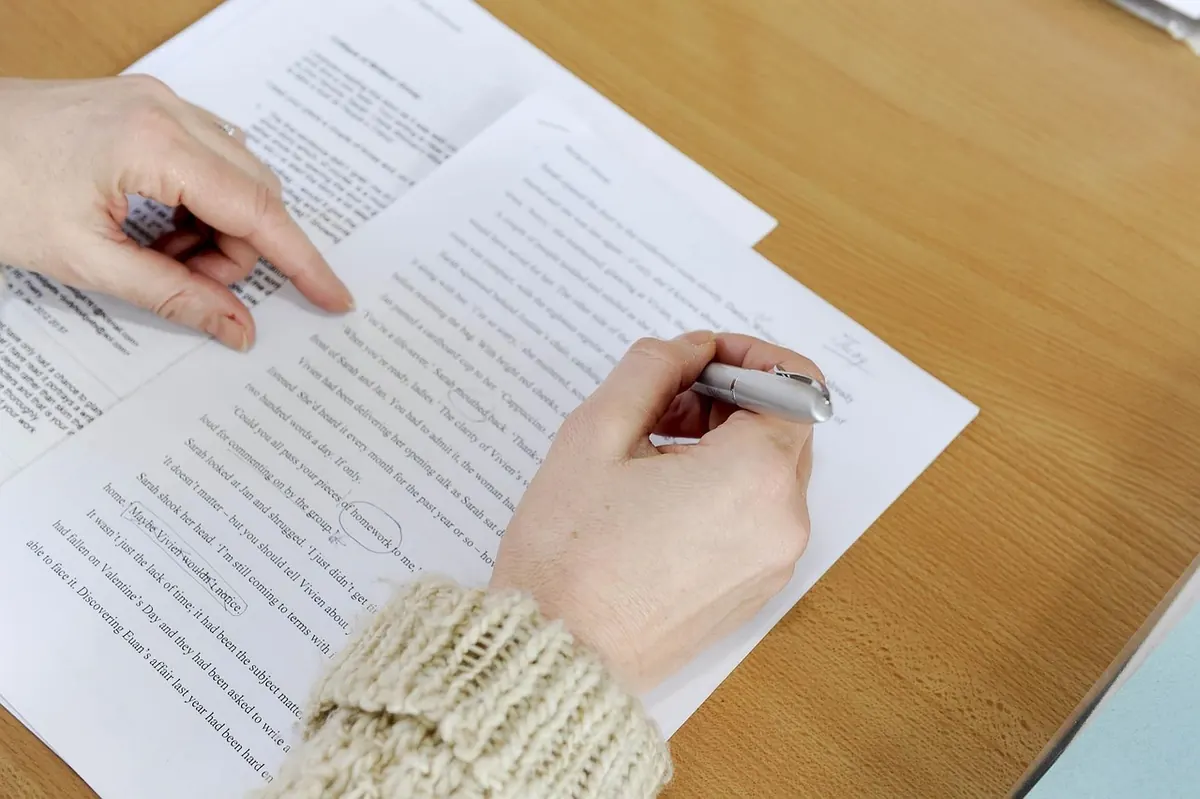
Photo: chachbrand / Pixabay
A month-by-month guide to when UK literary agents are busiest, how long replies take, and how to plan your...
A practical UK-focused comparison of traditional and self-publishing, covering costs, timelines, rights...
A practical British English copyediting checklist for fiction: UK spelling, punctuation, dialogue...